
Most table trouble starts with two people who wanted different games and never said so. Session zero is how you find that out while it is still cheap.
It does not need to be formal, and you do not need to run a separate session. Twenty to thirty minutes at the start of the first night, before anyone rolls, is plenty.
Tell them what game this is
Describe the adventure in three or four sentences, the way you would on the back of a book. Include the tone: is this a goofy heist, a dangerous hunt, a creepy mystery? Then say how long it will run and how many sessions you expect.
That one paragraph filters out most mismatches. Someone who wanted a serious dungeon crawl will tell you now, not two hours in.
Agree on character basics
- Level and sources. Which level are characters? Which books and options are allowed?
- A reason to be together. Ask each player to tie their character to at least one other character at the table.
- Lean toward the group. Tell them it is fine to be a loner with a past, but the character needs a reason to say yes to the adventure.
Set a few table rules
Keep this list short. Three or four rules are plenty:
- How you handle phones and distractions.
- That you will make quick rulings and look things up after the session.
- Whether characters can act against each other, and how that gets resolved.
- What happens when someone cannot attend.
Use a simple safety tool
Safety tools let people enjoy dark stories without anyone gritting their teeth through them. Three are easy to use and need almost no setup:
- Lines and veils. Lines are things that will not appear in the game at all. Veils are things that can happen but stay off screen, as a fade to black. Ask everyone to name any lines and veils, and write them down.
- The X-Card. Put an index card with an X on it in the middle of the table. Anyone can tap it to say "let's skip this" without explaining why. You edit the scene and keep playing.
- A pause. Agree that anyone can say "pause" to stop the game and check in. It works for confusion as well as discomfort.
Say out loud that using any of these is normal and nobody will be questioned for it. If a player uses one, thank them, make the change, and keep going without drama. That is how the tool keeps working.
Quick script
"Here is what I'm planning to run, and here is the tone. Is there anything you do not want to see, or anything you only want off screen? If something gets uncomfortable at any point, tap the card or say pause, and I will change it."
Ask each player one question
End the conversation with a question for everyone. "What is one thing you hope happens tonight?" works well. People answer honestly when the stakes are low, and you leave with a list of things to include.
Revisit it when it matters
Session zero is not one meeting. Check in briefly after the first session, and again before anything intense. If your game involves characters distrusting each other or a villain who plays with the party's minds, a longer check-in beforehand is worth it. The Pale Jester's Theatre has Session Zero guidance and safety-tool notes written in for exactly this reason.
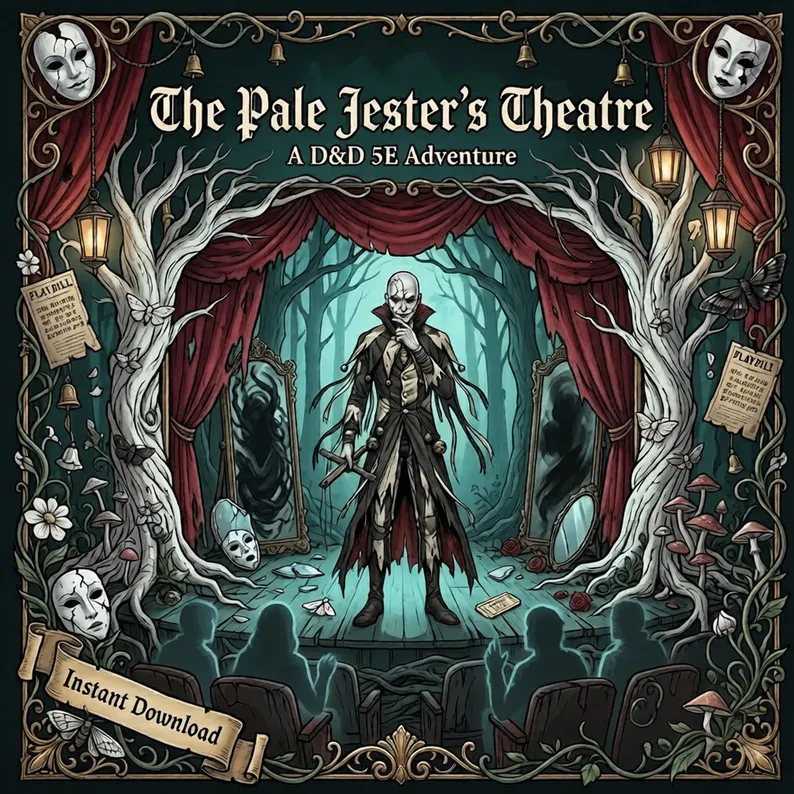
The Pale Jester's Theatre
A levels 5-8 Feywild adventure where an Archfey stages illusions to make the party misread each other. It includes tracked Doubt and Trust, a DM cheat sheet, and built-in Session Zero and safety-tool guidance.
The one-page checklist
- Describe the game, its tone, and its length.
- Agree on level, sources, and a reason for the party to be together.
- Set three or four table rules.
- Name lines and veils; put an X-Card on the table; agree on a pause.
- Ask each player what they hope happens.
- Plan to check in after the first session.