
Low-level one-shots are supposed to be the easy sessions. Then somebody interrogates a goblin for forty minutes, the rogue decides a locked door is a personal insult, and the “quick” adventure hits midnight with the boss still two rooms away.
Shrinking the adventure doesn't fix that. Making every scene pull double duty does.
Start with one problem the party can understand immediately
By level 3, players have enough abilities to be inventive without needing a rules seminar for every obstacle. Give them something concrete. The mine's exploding, the caravan never showed up, the bridge is occupied. Within ten minutes they should know exactly what's wrong.
A good hook also carries pressure. “Investigate a mine” is open-ended. “Find the trapped surveyors before the goblins bring the mountain down” gives the table a reason to move.
You need three beats, not a twelve-room dungeon
Think in scenes, not floor-plan completeness. Open with a fight, negotiation, or hazardous approach that sets the tone. Complicate it: new information should change what the players think the adventure is even about. Then let the villain, the environment, and everyone's earlier choices collide in the finale.
You can still add side rooms, secrets, prisoners, and loot. Just keep them optional. They're detours around the three beats, not toll booths the party has to pass through.
A fast pacing rule
If a scene has already delivered its clue, its interesting choice, and its emotional beat, let the players leave. Do not keep combat alive for three extra rounds just because two enemies technically still have hit points.
Let the room do some of the work
At this level, a burning fuse line or a support beam about to give out creates urgency without adding another monster to track. That's usually a better use of your prep time than a fourth kobold.
Just make it readable. Players should see the smoke or hear the beam crack before it actually hurts them. Telegraphing the danger is what turns a trap into a decision instead of a surprise tax.
Give the players non-combat wins
A low-level party feels heroic when it solves a problem sideways instead of head-on. A successful negotiation can pull enemies out of the finale entirely. A rescued NPC hands over a shortcut nobody expected. Somebody jams the mine cart before it turns into a chase, or the wizard notices the crystals react to magic and turns that into a weapon on the spot.
The session gets shorter every time a clever choice actually removes a future problem instead of just delaying it.
Give the finale a visible clock
Instead of “fight until the boss is dead,” give the finale a second objective: stop the ritual, cut the fuse lines, hold the gate for four rounds, whatever fits the scene. A visible clock makes even a familiar enemy feel different, because now the party has to split its attention instead of just trading blows.
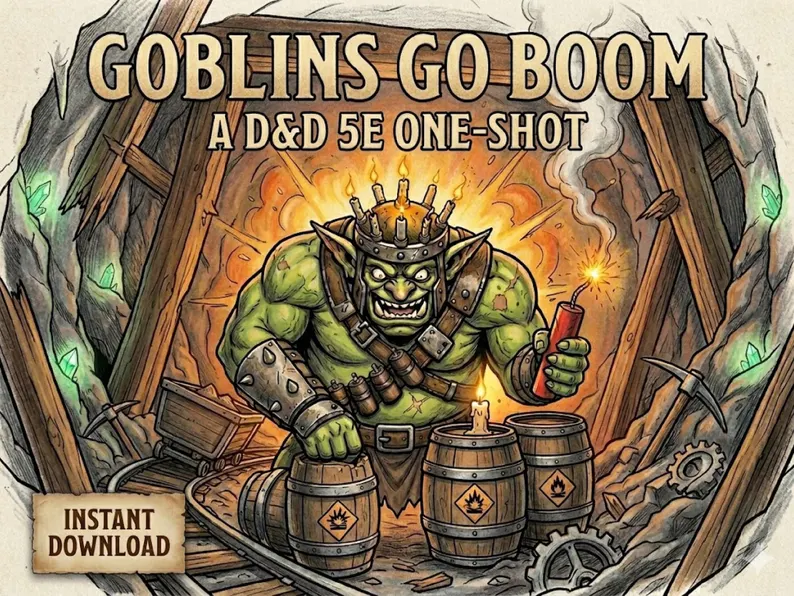
Goblins GO BOOM
A level 3–5 demolition dungeon built around unstable hazards, goblin saboteurs, a runaway mine cart, maps, tokens, and a collapsing final chamber.
View on Etsy ↗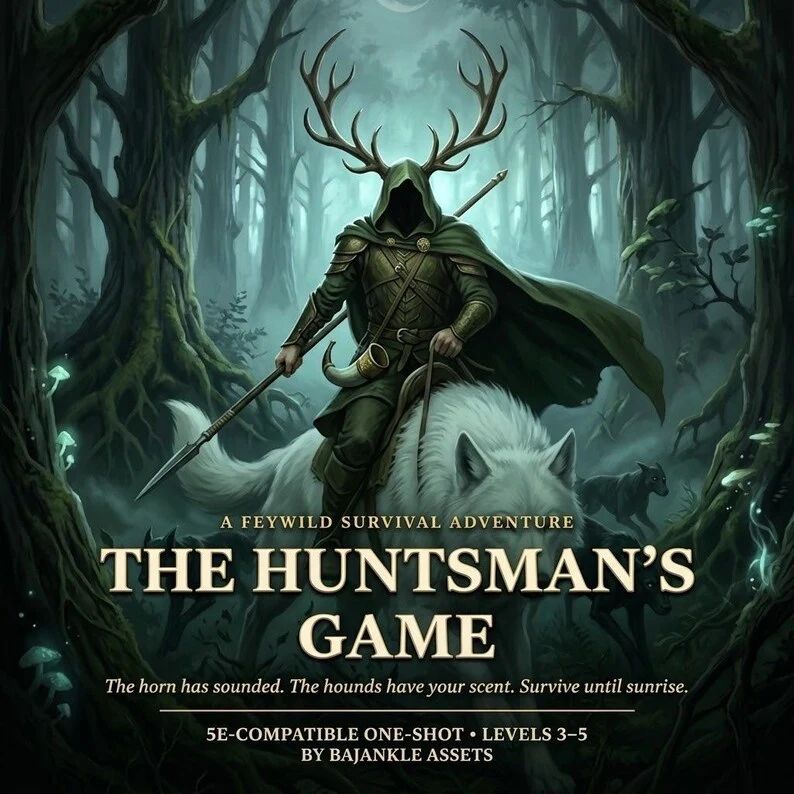
The Huntsman's Game
A level 3–5 Feywild survival one-shot built around a visible pursuit clock: outrun the Huntsman and his hounds and reach the standing stones before dawn.
View on Etsy ↗A one-night checklist
- One-sentence problem the party understands immediately.
- Three mandatory beats maximum.
- At least one meaningful shortcut or optional branch.
- One environment rule players can understand after seeing it once.
- A finale objective beyond “deal damage.”
- A clear ending. When the objective is achieved, end the adventure.
Hit those six and the one-shot still feels like a full adventure. It just doesn't need forty rooms to prove it.
New to running games? Start with How to Run Your First D&D Game and What a Low-Prep One-Shot Should Include.