High-level one-shots fail for a predictable reason: everyone has a lot of cool buttons, so the adventure keeps adding more enemies, more hit points, and more phases until the night becomes a spreadsheet.
Levels 10–12 are exciting because characters can do ridiculous things. Design around that instead of trying to suppress it.
Assume the party will bypass something
Flight, teleportation, divination, powerful control spells, and specialized class features can erase obstacles. Good. Let them. A one-shot benefits when a clever ability removes ten minutes of logistics.
Protect only the problems that matter to the theme. If the tournament depends on reaching the arena, teleporting there doesn't break the adventure. It just skips to the interesting part faster.
Use fewer enemies with clearer jobs
At high level, six nearly identical enemies create six turns of bookkeeping. Instead, give each major opponent a readable role: the brute controls space, the duelist punishes isolated targets, the caster changes terrain, the support creature keeps a ritual alive.
Players can make tactical decisions because they understand what matters.
Make objectives compete with damage
High-level characters are very good at damage. The encounter becomes more interesting when damage is only one of several pressures:
- Score points before the rival team does.
- Carry an object through a dangerous arena.
- Break three seals while the champion hunts whoever holds the key.
- Protect a neutral creature the enemies are also trying to capture.
- Survive escalating terrain until a gate opens.
Use tournament structure for pacing
A tournament gives you a built-in reason to separate big encounters with short roleplay scenes, rival interactions, and changing stakes. Each round can test something different: mobility, teamwork, survival, whatever the theme calls for. None of it needs a giant interconnected dungeon holding it together.
The high-level pacing trick
Tell players what the win condition is before initiative. When everyone understands whether they need to survive, score, escape, or defeat a champion, turns get faster.
Let the rivals matter between fights
A memorable rival should be someone the party can respect, dislike, bargain with, or save. Then the final match has emotional weight. If rivals exist only as stat blocks, they are just another monster with a name.
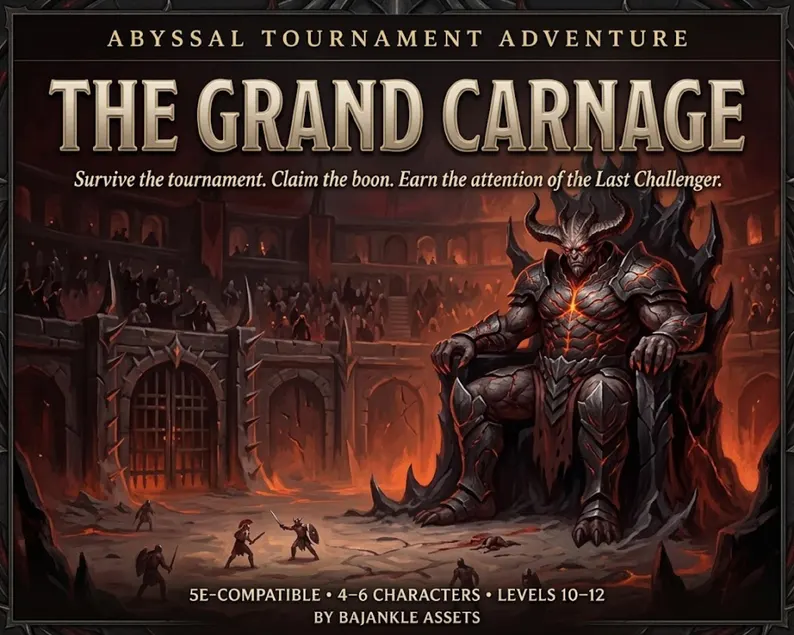
The Grand Carnage
An abyssal tournament adventure built around competing champions, dangerous trials, a demon lord host, and victory that earns attention rather than simply treasure.
View on Etsy ↗Before the session starts
- Ask players to know their most-used abilities.
- Use average damage for minor enemies when it keeps turns moving.
- Put unusual terrain on the map from round one.
- Give every encounter a visible objective.
- Keep one spectacular surprise for the finale instead of stacking surprises into every round.
High-level play feels epic when players get to be powerful under real pressure. Inflating every monster until nobody's abilities matter anymore just feels like a slog with better lighting.