
A five-year-old and a ten-year-old at the same table want very different things. One wants to roll a die and help the goblin. The other wants a plan, a weapon, and a way to win. You can serve both without splitting the group.
Same scene, different questions
The story stays the same. What changes is what you ask each child to do. Say the strange thing is a locked chest with a puzzle on the lid. The younger child counts the dots and points to the matching key. The older child works out why the pattern is wrong and explains how they would pick the lock.
A useful dial for this: to make a scene easier, tell a child what kind of problem it is. To make it harder, describe the strange thing and wait. You can do both in the same scene, depending on who you are asking.
Let each child use the rules that fit them
Younger kids do best with very simple rules, such as a name, a few hearts, a couple of tags, an item, and a special move. Older kids may want a real character with stats and abilities. Both can play the same adventure.
The Great Dad Joke Heist is written this way. Younger kids build a Simple Hero in five steps, with a name, Hearts, three Hero Tags, an item, and one Special Move. Older kids can bring a regular third-level D&D character. The adventure includes conversion notes throughout, so when a Simple Hero and a full D&D character are in the same scene you are never guessing how their actions compare.
You can borrow the idea for any adventure. Before the game, decide how a simple hero's success compares to a full character's, and write it on a card. Then you are not inventing it mid-scene.
Give everyone a job that matters
Different ages want different kinds of importance. Some ideas:
- The navigator. Reads the map, picks the path, remembers where they have been.
- The keeper. Holds the important item and decides when to use it.
- The talker. Does the negotiating with the creature.
- The scout. Looks ahead and reports back.
Rotate them. If the older child always gets the cleverest job, the younger one stops trying. If the younger one always gets the sillier job, the older one gets bored.
Use a grown-up sidekick
An adult character at the table can level things out. The Great Dad Joke Heist includes a Dad Sidekick stat block built to protect and encourage kid heroes rather than steal the spotlight. The idea works in any game: give the adult character a job that boosts the kids, like healing a heart, handing over a useful item, or cheering for a clever idea.
Keep turns and wins even
- Rotate who goes first.
- Make sure every child has at least one moment per scene that changes what happens.
- Keep fights short, so nobody waits for a long time.
- Praise ideas, not just results.
When it goes wrong
If an older child takes over, give them a different job: let them teach the younger one, or ask them to hold the plan while the younger one carries it out. If the younger child melts down, pause. Give a snack break or change the pace with a physical task, then come back to a quick, easy win.
You are not trying to make every moment perfectly fair. You are trying to make sure each child leaves feeling that they mattered.
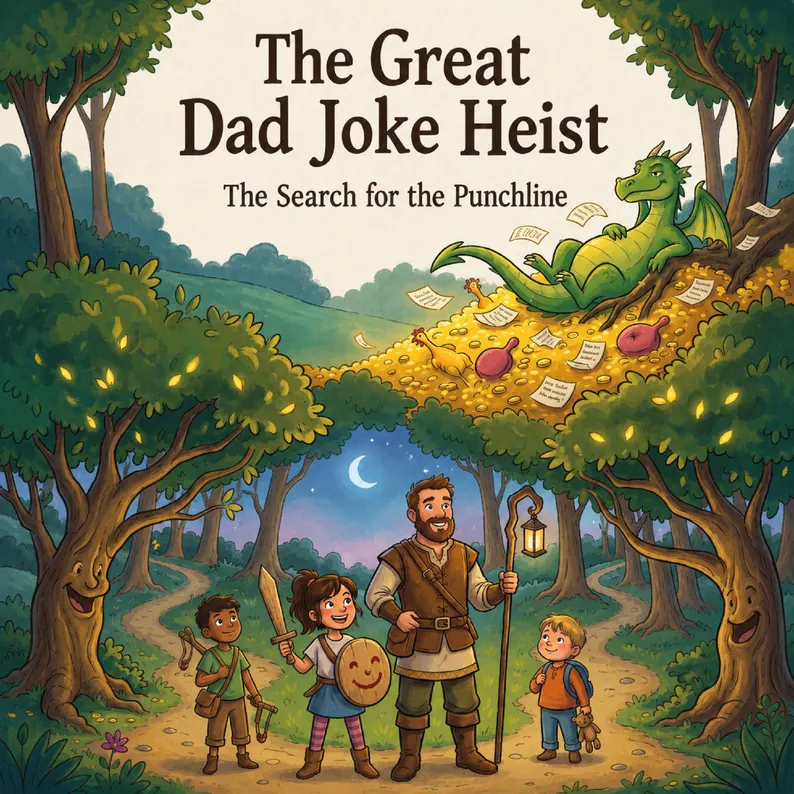
The Great Dad Joke Heist
A 21-page one-shot with Simple Hero rules for younger kids, real third-level D&D for older kids, and a Dad Sidekick stat block built to protect and encourage the kids.